
A reader wrote our ministry to share her pain over putting down her elderly dog, who had aggressive cancer. She explained she had saved the dog from a kill shelter, and helped him through various medical issues over the years.
This person then asked a penetrating question: Why does God allow this to happen to the innocent little ones?
Our Eternal Perspective Ministries staff member Heidi shared this compassionate response:
I’m so sorry to hear about your sweet dog. You saved him from an earlier death, and I can tell by the sadness in your e-mail that you gave him a loving and good life. You did something that God intended for us to do when He created the world, by being a caretaker of one of His precious animals.
The Bible never says animals are guilty of sin, or deserve to be punished for human sin. They are morally innocent. Yet it does say that all creation suffers because the world itself has been damaged by humanity's fall into sin. Romans 8 says that “the whole creation has been groaning,” waiting for the day God restores everything. Animal suffering is one of the heartbreaking consequences of living in a world that is no longer what God originally intended.
Randy often emphasizes that when God finished creation, He called it “very good.” Disease, death, and suffering were not part of His original design. They are intruders, not permanent residents. The Bible ends with a restored creation, a global Eden, where death, pain, and loss are gone. That is why we encourage an eternal perspective, which includes turning our eyes to the restoration of the earth that we are promised because of the work Jesus did on the cross to conquer sin and death.
You’re struggling with a question that most of us struggle with. We aren’t given a specific answer for why one animal develops aggressive cancer while another lives to old age. Job never learned the reason for his own suffering, either. Instead, he learned that the God who rules the universe is wiser and more compassionate than he could yet see. Our inability to explain a particular tragedy doesn’t mean there isn’t a purpose beyond our understanding.
Here are a few posts on our website that I hope may be helpful to you as you process your grief and take your questions to God:
In this one, a mother asks a very similar question to yours about why her son had to die.
Is It OK for a Christian to Grieve the Loss of a Pet?
Comfort for Those Grieving a Pet
May the Lord bless you and keep you, and the God of all comfort be near to you as you grieve the loss of your beloved pet.
Randy again: Some might say to those grieving a pet, “It’s only an animal.” But pets offer companionship and love that many people don’t find elsewhere. They love us naturally, with no hidden agenda (beyond treat-seeking, which is usually not well hidden).
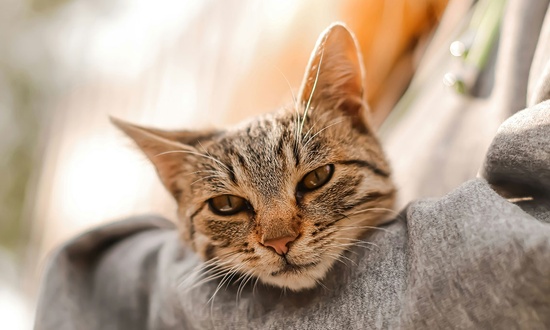
For many, a pet’s death is among life’s greatest losses. Margaret Haskins Durber, a character in Garrison Keillor’s Lake Wobegon series, captures this feeling in a poem titled “In Memory of Our Cat, Ralph”:
We quickly turned and went inside the empty house and sat and cried
Softly in the dark some tears
For that familiar voice, that fur,
That soft weight missing from our laps,
That we had loved too well perhaps
And mourned from weakness of the heart,
A child’s weakness—to regard
An animal whose life is brief
With such affection and such grief.
Though most pets have a short lifespan compared to humans, they occupy an important place in our hearts while they are with us. A pet is part of daily life in a way few friends are. We can affirm people’s greater worth, while still missing a pet more because of that daily bond. We love animals not because of sin but because God made us—and them—to love each other. I like how author Gary Kurz puts it:
We dictate their routines and provide for their needs. We feed them, give them shelter, rush them to the veterinarian when they are feeling ill. For all practical purposes, we treat them as we do our own human children. But here is the difference, they are perpetual, because unlike our own offspring, they do not grow up and leave the nest. They do not go to college. They do not get married. They do not enlist in the military. They remain in the home and continue to look to us for their provision and care. In fact, they depend on us for as long as they have breath. On our part, we are only too happy to meet those needs. For some, pets are the only children they will ever know.
Someone once asked me a penetrating question: “Why didn’t God make animals to live longer?” Perhaps partly so that we could learn to grieve and prepare for our own deaths as well as those of our loved ones. And furthermore, to provide us with the joy of having had several pets in our lifetimes.
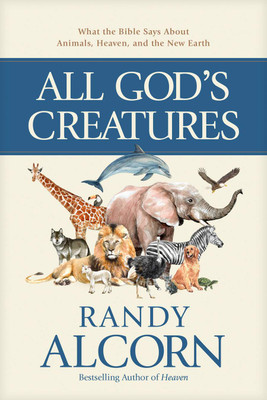
If my premise is correct, which I explore in my book forthcoming All God’s Creatures, this will give us more happiness in eternity as a result of being able to reunite on the New Earth with more than one beloved pet.