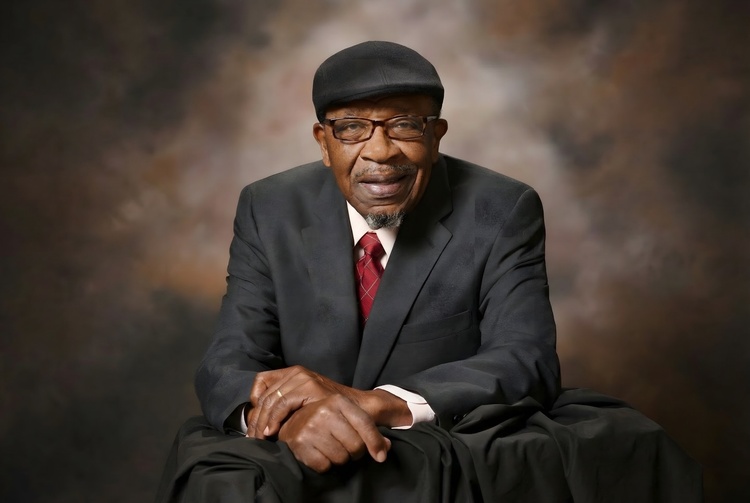

Last Friday, March 13, 2026, at age 95, Dr. John Perkins, a man I consider a dear friend, went to be with the Lord and Savior he loves. There are perhaps three dozen people I can name that have truly changed my life. John Perkins is one of them.
John lived a remarkable life and is now more alive than ever in the presence of Jesus. In 1930, he was born into extreme poverty to a family of sharecroppers. He lived in the Jim Crow south where racism and injustice were rampant, and the families whose parents or grandparents had been born slaves continued to suffer for decades after slavery had been abolished.
Sharecroppers worked land owned by others and received only a small part of the crop. John’s mother Maggie died of extreme malnutrition that amounted to starvation. Soon after that, John’s father abandoned the family. The children were raised mostly by their grandmother.
John’s older brother, Clyde, a decorated World War II veteran, was shot and killed by a Mississippi police officer while standing in line outside a movie theatre. Clyde died in John’s arms, and his brother’s death affected him deeply. Later John Perkins served his country in the Korean war.
I spent time with John’s son Spencer in 1994 at his house in Jackson when researching my novel Dominion, set in Mississippi, part of a visit where I also was with John. I’ll come back to Spencer.
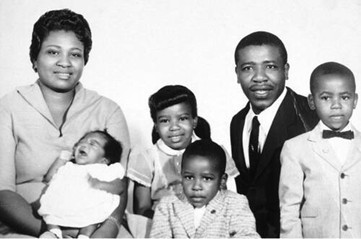 My first introduction to John Perkins was in Bible college when I’d been a Christian for only four years. I read John’s book Let Justice Roll Down. It stunned me. The book kept me up at night but also won over my heart. I’ll tell some of the story that affected me most.
In February 1970, Perkins was working in the cities of Mendenhall and Jackson with his Voice of Calvary Ministries, helping poor black families and promoting reconciliation between black and white Christians. It was one of the most difficult environments anywhere to do that.
One week, several young civil rights workers connected with the ministry were arrested. Perkins and others drove to check on them and bring them home safely.
When they arrived, police stopped their car. Perkins and the others were arrested without cause and taken to the Rankin County Jail. John was known both as a pastor and a civil rights activist committed to nonviolence.
What happened next was horrifying. In the jail, 40-year-old John Perkins was subjected to brutal torture by officers who beat him with nightsticks and fists, and kicked him repeatedly as he laid on the floor. They stuck a fork down his throat. They threatened to kill him and make it look like suicide. Perkins later said that he thought he would die that night. Some of his family were outside the jail and could hear his screams. (There are many, many good police officers, but sadly, this was at a time and place where there were too few of them.)
 While suffering in the jail, Perkins prayed, and later told how God miraculously helped him realize that the same love that kept Jesus on the cross was the love God had for the men who were beating him.
Somehow, by a work of God’s Spirit, John felt pity and compassion for the very men who had tortured him. Then and there he forgave them. He felt the hatred he’d had for white people drain out of him. He would never be the same. And neither would anyone who came to know him.
I knew all this from reading that powerful book. But in 1988, I met John when both of us were speaking at a writers’ conference in Minneapolis. I asked to take him to lunch. He told me he had dropped out of school in the third grade, but our coffee cups weren’t half empty before I realized he was one of the wisest men I’d ever met. (The fact that a man with a third-grade education has nineteen honorary doctorates says so much.)
As he told stories, John smiled a lot and shed a tear or two. When he crossed his legs, his raised pant leg revealed a sizable scar. I don’t know whether that scar was old or new, temporary or permanent, from an accident or surgery or torture—but to me it symbolized what he’d endured and gave power to his words about forgiveness.
I’m not easily impressed, but after two hours, in fact in the first ten minutes, I knew John Perkins was the real deal. Jesus came “full of grace and truth” (John 1:14). Christ’s fingerprints were all over him. He could have been angry and bitter; instead, he embodied gospel grace. He would have been about 59, and was incredibly kind to me, a 34-year-old white suburban pastor trying to understand the world. Jesus flipped a switch in me that day. As I’ve said, I’ve never been the same since.
A year later, not coincidentally, I became involved in peaceful, nonviolent civil disobedience, modeled after the civil rights movement. (I’m not sure I would have if I didn’t know John’s story and his sacrifices.) This resulted in multiple arrests, brief jail stays, the loss of my job as a pastor, and decidedly unpopular news coverage. The cause was different (defending the rights of unborn children), but as Martin Luther King Jr. put it, “Injustice anywhere is a threat to justice everywhere.”
When arrests and lawsuits kept me from continuing as a pastor, I started Eternal Perspective Ministries, which continues to give away all my book royalties to kingdom causes. Besides missions, pro-life work, and helping the poor, some of my other central concerns were racial justice and reconciliation. This came about largely through John’s influence, and Nanci and I were honored for decades to support the John and Vera Mae Perkins Foundation for Reconciliation, Justice, and Christian Community Development.
 When writing my novel Dominion in 1995, I made my main character a black journalist who grew up in Mississippi. I immersed myself in black history and interviewed many African Americans (including Reggie White, who was then playing for the Green Bay Packers). I contacted John’s son Spencer, who lived in Jackson with the family of Chris Rice, a white brother. Chris and Spencer had coauthored More Than Equals, an excellent book on racial reconciliation. I asked if I could meet with them. When Spencer was a teenager, John had enrolled him in an all-white high school, and he had his own stories to tell. (Sadly, Spencer died of a heart attack only three years after our meeting, at age 44.)
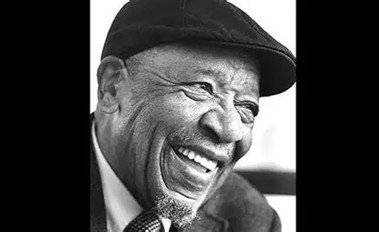
I attended a Christian Community Development Association National Conference where John Perkins spoke. That afternoon John became my host, and we walked the streets of Jackson. Life stories overflowed from his heart. He took me into a thrift shop where he found an old hat tagged for twenty-five cents. He tried it on and asked for my verdict. I told him it looked “snazzy.” He loved that description and smiled broadly.
The girl at the counter recognized John as the founder of the ministry that owned the thrift shop and said, “Dr. Perkins, you don’t have to pay for that!” He insisted and then handed her the quarter and proudly put on his hat. I smiled every time I looked at him the rest of the day. What great happiness this man found in something so small—he saw life crowded with God’s kindnesses, which helped me see the same. To be with him was to be mentored in the ways of Jesus.
My favorite character in my novels is Obadiah Abernathy, from my novel Dominion, who played baseball in the old Negro leagues. He modeled dignity, grace, wisdom, and humor. My sports inspiration for Obadiah was Buck O’Neil of the Kansas City Monarchs, but my spiritual inspiration was John Perkins. Whenever I wrote dialogue for Obadiah, I asked myself, What would John say? Any reader who came to love Obadiah Abernathy (and many readers have told me they did) was coming to love John Perkins, without knowing it.
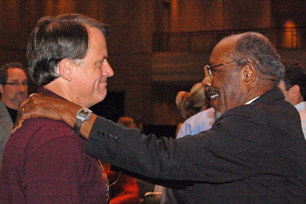 In 2008, the Evangelical Christian Publishers Association honored John Perkins with the Jordon Lifetime Achievement Award. I cleared my schedule to attend the event where he was presented with the award. After John spoke, I waited at a distance. Though more than ten years had passed since we’d last seen each other, his face lit up when he saw me, and he called me by name. A photographer snapped a picture of John greeting me, his hand on my shoulder. The photo appeared on the front page of a newspaper the next day. I still treasure it.
John practiced what he wrote:
Jesus intentionally brought together disciples who were very different—fishermen, tax collectors—not people who would naturally love one another. But he did this to show us what love looks like in practice. We have the privilege of putting this same kind of love on display as we love those in the body of Christ who don't look like us.
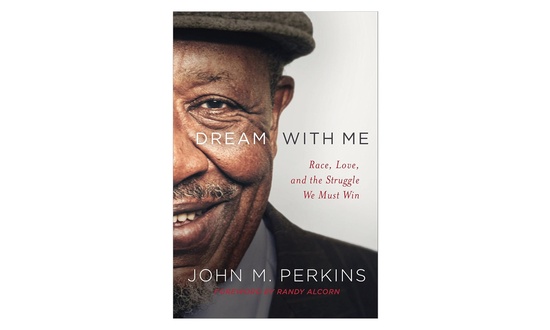
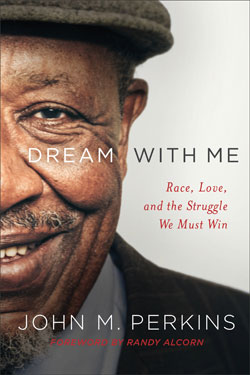 I highly recommend his 2017 book Dream With Me: Race, Love, and the Struggle We Must Win, which flowed straight from his heart. It is honest, humble, prophetic, and Christ-honoring, and we need to hear it. He wrote in the book, “At eighty-six years old, people tell you how much wisdom you have. I don't know about all of that, but I do know that God has done much in me and through me, and He's still working on me.” I was honored and surprised when John asked me to write the foreword to Dream With Me. What a privilege.
In December, just three months ago, I had a Zoom call with the Perkins family. John was present, and told one of his daughters he wanted to join the call. He smiled wide and nodded his head when I told a story about our time together in Jackson thirty years earlier. He remembered something he said I had done for him, but we couldn’t quite figure it out. That was alright. His native language was love, and it shined through his dementia.
We talked about a very recent tragedy in the Perkins family. Last summer, on June 22, 2025, John’s granddaughter, 23-year-old Karah Perkins Potter, stopped at a gas station in Jackson. One of her friends was quarreling with her boyfriend, and Karah stepped in to help her friend. During the confrontation, a man pulled a gun and shot her in the head. She died that day. When I talked with her parents six months later, understandably the grief was still fresh. What is worse than the violent death of one’s child, or grandchild?
Three months after that Zoom call, six days before John died, after hearing he was on hospice, I sent this email to his daughters:
Priscilla and Elizabeth and Deborah, I join you and your whole family in prayer for your precious father. Our staff is praying for him. I remember vividly the day my dear wife Nanci went into hospice care, here in our home. So hard, but God did great things through her years of cancer. We can't wait to see her again.
The thought of your dad soon hearing God say "well done my good and faithful servant," is in one way difficult, yet also very beautiful. What a heritage you have. And the thought of John joining other family members already there, including Spencer and Karah, is a reminder that your loss will be Heaven's gain.
Prayers for your dad and mom and for you. To me, John will always be a dear brother and precious friend, and even though there were years when we had no contact with each other, he remained a significant part of my heart. And always will. Can't wait to see him again in a far better world where I suspect he will be wearing that same hat!
After our call, his daughters sent me several of his books, which he had signed with difficulty. Also enclosed was his hat, with his signature on the back of it. And the hat is exactly like the “snazzy” one he was so delighted to buy that day for a quarter. I am not going to part with that hat!
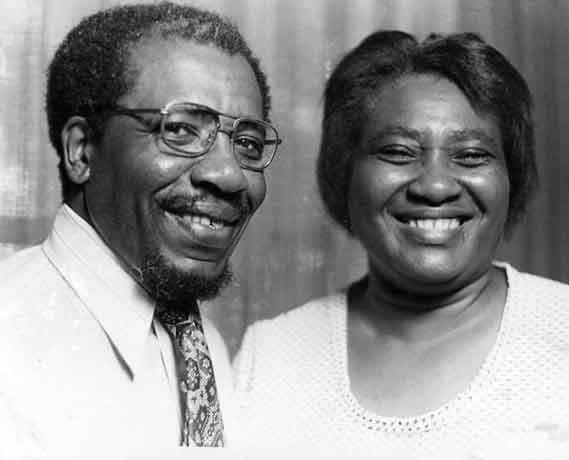
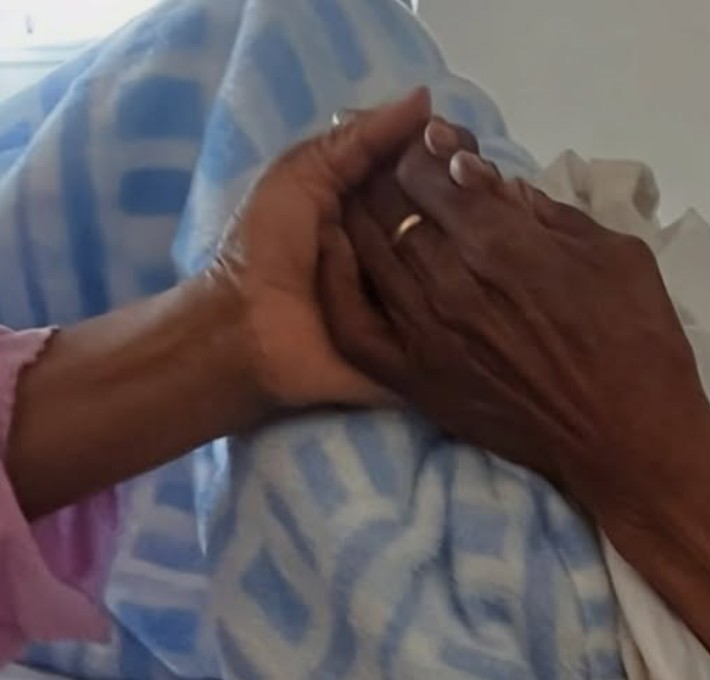 Do especially pray for Vera Mae, John’s wife of 74 years. Their daughter Elizabeth posted this precious photo days before he died, and wrote, “One moment that made me smile was when Moma joyfully called out, ‘Hello, baby!’ and Daddy turned toward her. It was such a tender reminder that love still speaks so clearly. This picture holds so much tenderness—Moma’s hand resting lovingly in Daddy’s, a simple but powerful image of love, faith, and the gift of being together in this moment.” I was so touched looking at that photo, and it reminded me of how long I spent looking at Nanci’s and my hands being held together on her last few days here. We were married 47 years, but it’s hard to believe that John and Vera Mae were married nearly 30 years longer!
The greatest compliment I can give John is to say that he showed me Jesus. Thousands, if given the chance, would gladly tell their stories about John and the ways he changed their lives—and one day, at great banquets with Christ at the head of the table, they will.
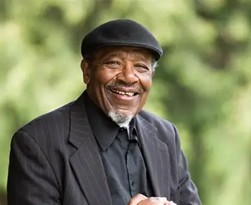 I may see him first in the present Heaven, but I especially look forward to the resurrection and spending time with John Perkins on God’s New Earth, where love, justice, and joy will be the air we breathe (see 2 Peter 3:13). Maybe he will live in the New Jackson and take me for a long walk again. But wherever he lives, I will not be surprised at all to see him smiling widely and wearing that same kind of snazzy hat (just like the ones in the photos) he bought for a quarter! I imagine John will be thanking God for His goodness and for how his heart, that was once full of hate, will forever be overflowing with love.