
To answer the question, “Should animals matter to us?” we must start with a more foundational question: “Do animals matter to God?”
Scripture answers this question decisively: “All the animals of the forest are mine, and I own the cattle on a thousand hills. I know every bird on the mountains, and all the animals of the field are mine” (Psalm 50:10-11).
God claims every creature as His own. He takes personal interest in them, on their own merits, not simply in conjunction with humans. He delights in them and tells His people to look after them: “The godly care for their animals, but the wicked are always cruel” (Proverbs 12:10).
That doesn’t mean we can’t swat a fly or step on a cockroach, but we are told never to be cruel, which would mean never pulling the wings off a fly or the legs off a cockroach or leaving an animal squirming in pain. God is never indifferent to brutality. Cruelty is wicked in His sight and will come under His judgment.
God commanded that animals be permitted to rest on the Sabbath, just like people (Exodus 20:10). He also insisted that oxen not be muzzled but allowed to eat what they choose while they work (Deuteronomy 25:4). Oxen are large animals; they can weigh 800 pounds and have large appetites. An Israelite family might have been tempted to muzzle their ox to save more grain for human consumption, but God’s law forbade it, demonstrating His compassion for animals and calling on His people to exercise that same compassion.
God also gave specific commands to care for lost or struggling animals:
If you see your neighbor’s ox or sheep or goat wandering away, don’t ignore your responsibility. Take it back to its owner. If its owner does not live nearby or you don’t know who the owner is, take it to your place and keep it until the owner comes looking for it. Then you must return it. . . .
If you see that your neighbor’s donkey or ox has collapsed on the road, do not look the other way. Go and help your neighbor get it back on its feet!
Deuteronomy 22:1-2 , 4
Jesus reflected His love for animals when He asked, “Don’t you untie your ox or your donkey from its stall on the Sabbath and lead it out for water?” (Luke 13:15). And, “If your son or your cow falls into a pit, don’t you rush to get him out?” (Luke 14:5). Both are urgent priorities—your child first, of course, but your animal’s welfare very much matters too.
God’s law even directed care for wild animals: “Let the land be renewed and lie uncultivated during the seventh year. Then let the poor among you harvest whatever grows on its own. Leave the rest for wild animals to eat. The same applies to your vineyards and olive groves” (Exodus 23:11).
In Job, the longest divine monologue in Scripture spans nearly four chapters where God speaks about animals, revealing His love for and delight in them (Job 38-41). (Despite these passages and many more, how many sermons have you ever heard about what God thinks of animals?)
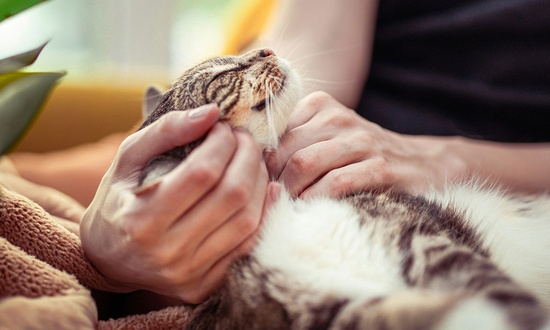
If God—who created the animals—loves them, then obviously we, who are made in His image, should care for them too. Yes, it’s possible to make an animal into an idol by having an unhealthy attachment; but when it is properly held and demonstrated, our love for animals reflects God’s nature and affection.
Because Christians are being renewed in God’s image, as Colossians 3:10 declares, we should be the first to care deeply about what He created and values. As we see in the Gospels, Jesus places a high value on something as common as a sparrow or a raven (Matthew 10:29; Luke 12:24). And by implication, He shows a genuine affection for sheep, calling Himself the Good Shepherd (John 10:11).
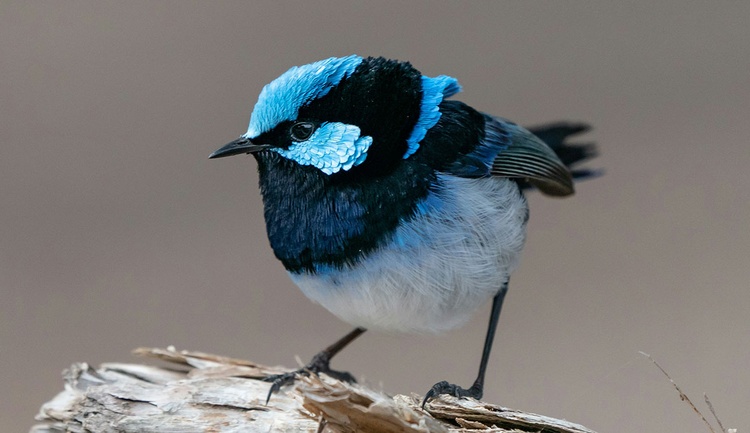
When speaking of sparrows, Jesus didn’t just affirm that God cares about them in general, but in particular: “Not one of them will fall to the ground outside your Father’s care” (Matthew 10:29, NIV).
Sparrows are important enough for God to keep track of and care about their lives and deaths—each and every one. He surely doesn’t intend for us to see sparrows as the exception, but as the rule. He shares the same loving-kindness and caring attention for these ordinary birds with every other animal. Since He cares for each living or dying sparrow, shouldn’t we care for His animals too?
In a parallel passage to Matthew 10:29, Luke includes words Matthew doesn’t, suggesting Jesus made similar statements on different occasions: “What is the price of five sparrows—two copper coins? Yet God does not forget a single one of them” (Luke 12:6).
What does “God does not forget a single one of them” mean?
Sparrows are the most common bird in the world. One scientific study says there are 1.6 billion house sparrows—by far the largest number of any sparrow species—and also more than sixty other species of sparrow. Jesus said that God is attentive to the life and death of every single one. He could hardly have chosen an example that more clearly affirms His love for every animal He has created. If God loves and pays attention to each sparrow—out of billions over the course of history—what animal does He not care about?
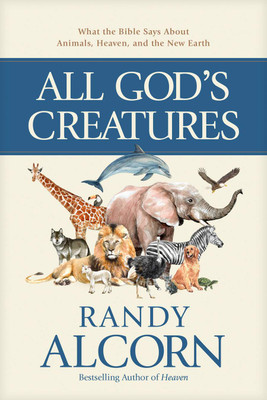
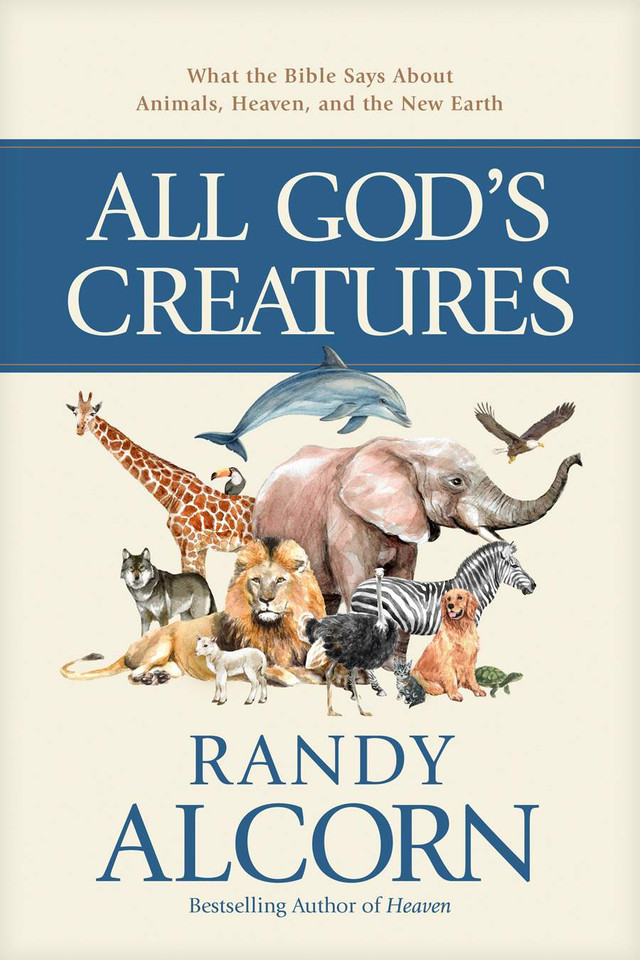 Not everyone considers themselves “an animal person,” and that’s OK, but it’s not right to dismiss animals as unimportant simply because you don’t own a pet or have no desire to. I hope I’ve made a convincing case that that if animals matter to God—and Scripture shows us they do!—then it’s only right that they matter to God’s people, too. They are meant to point us to their Creator, and increase our worship of Him. My prayer is that my book All God’s Creatures, which will released on November 17, will help believers think through the subject of animals from a biblical perspective.
I’m grateful for those who provided endorsements for All God’s Creatures. My friend, author Ann Voskamp, lives daily in the world of farm animals, and graciously offered this endorsement:
As a farmer's daughter, and a farmer’s wife, I have spent most days of my life caring for animals. I thought I understood animals—and then I read this book. With rigorous biblical scholarship and breathtaking scope, Randy Alcorn's All God's Creatures is the book I did not know I was waiting for—meticulous where it needs to be, tender where it earns it, and genuinely world-enlarging throughout, Alcorn will change what you see when you look at the animals around you, and you won't be the same. More than that: he will change what you see when you look at their Creator! This is not a book about any trite sentimentality. It is a book about the staggering generosity of a Creator who is larger and wilder and more delightfully attentive than we can hardly dare to believe! It completely undid me. Read this book and let your vision of eternity grow into the glorious expansiveness of God.
May thinking about God’s words concerning animals, and His self-revelation through animals, cause us to have a bigger and more joyful view of our magnificent Creator and Savior!
(See my other blogs related to All God’s Creatures, including My New Book All God’s Creatures, Coming This Fall; We Can Simultaneously Make Room in Our Hearts for God, People, and Animals; and Why a Book about Animals, and God’s Eternal Plan for Them?)